
Taking a Car Out of Your S Corp Costs You Tax Whether You Pay for It or Not.
A truck the company wrote off in full has a zero basis, so moving the title into your own name is a sale under §311(b), not a paperwork change. The $44,000 of ordinary income lands on your K-1 whether or not you pay the company a dollar for it.
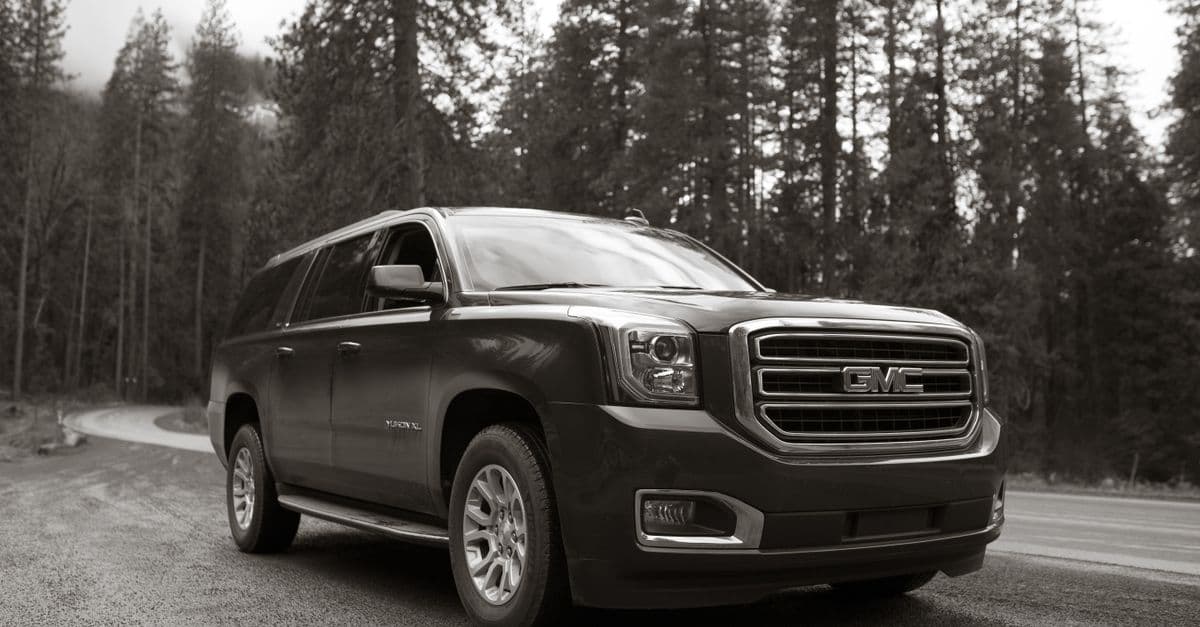
A framing contractor called in November with what he thought was a paperwork question. His S corporation bought a crew-cab pickup two years ago and deducted all $58,000 of it under §179. The company just bought a newer truck, he wants the old one in his own name before year end, and he wanted to know what the DMV would charge. Taking a car out of your S corp is not a title change, though. It is a sale, and the price is set by what the truck is worth, not by what anyone pays for it.
Taking a car out of your S corp is a deemed sale
§1371(a) runs the subchapter C rules through to S corporations, which is how §311(b) reaches a company like his at all. When a corporation distributes property worth more than its adjusted basis, it recognizes gain as if it had sold that property to the shareholder at fair market value. No money has to change hands for the gain to exist.
Section 1245 decides the character, and on a vehicle it is the worst answer available. Recomputed basis is adjusted basis plus every dollar of depreciation taken, so this truck's recomputed basis is $58,000 against an adjusted basis of zero, and every dollar of gain up to $58,000 is ordinary income rather than capital gain. Treas. Reg. §1.1245-1 applies recapture to a distribution of §1245 property even where the corporate nonrecognition rules would otherwise have kept the gain off the return. Basis is the one piece working in your favor: the gain raises your stock basis under §1367(a)(1) before the distribution is tested under §1368, so the truck coming out does not usually stack a second layer of tax on the recapture.
Paying the company for the truck changes nothing
There are three ways out and two of them cost the same. Distribute the truck to yourself, buy it from the company at fair market value, or leave the title alone and start driving it as a personal vehicle. The first two are the same deemed sale at the same price, because fair market value is the tax base either way. The difference is where the cash sits: buy it and the company keeps $44,000 against $44,000 of fresh stock basis, which can come out later without tax.
The third exit is the one that looks free. A pickup rated over 6,000 pounds escapes the §280F(a) depreciation caps but is still listed property under §280F(d)(4)(A)(ii), and a crew cab is not a qualified nonpersonal use vehicle. In the first year qualified business use falls to 50% or less, §280F(b)(2) recaptures excess depreciation as ordinary income: everything deducted in the earlier years over what straight-line depreciation across the alternative depreciation system recovery period would have allowed. Here that is $40,600 on Form 4797, and the company still owns the truck while your personal miles keep landing on your own W-2 at the annual lease value, which is the problem in personal use of a company car.
- 2024 cost, deducted in full under §179
- $58,000
- Adjusted basis today
- $0
- Documented trade-in value, November 2026
- $44,000
- Exit 1, distribute it: ordinary income under §311(b) and §1245
- $44,000
- Tax at 24% federal plus 4.45% Utah
- $12,518
- Exit 2, buy it for $44,000: ordinary income, company keeps the cash
- $44,000
- Tax, identical
- $12,518
- Exit 3, keep the title and drive it personally: §280F(b)(2) excess depreciation
- $40,600
- Tax, and the truck is still the company's
- $11,551
- What exit 3 saves you
- $967
Tax year 2026, one-shareholder S corporation, Utah resident filing jointly. The 24% federal bracket runs from $211,400 to $403,550 of taxable income under Rev. Proc. 2025-32, and Utah's rate is 4.45% for 2026 under S.B. 60. The truck is a crew-cab pickup with a cargo bed over six feet, so the §179(b)(5) sport utility vehicle cap does not apply, and a gross vehicle weight rating over 6,000 pounds keeps it outside the §280F(a) passenger automobile caps. Exit 3 assumes qualified business use falls to 20% in 2026 and prices excess depreciation as the $58,000 allowed less straight-line depreciation over the five-year alternative depreciation system recovery period for light general purpose trucks under Rev. Proc. 87-56, half-year convention: $5,800 for 2024 and $11,600 for 2025. Ignores any §6654 estimated tax penalty.
Where the $44,000 goes missing
This is the part almost nothing written for owners covers, and it is why the item goes unreported more often than it goes wrong. Because a §179 deduction on this truck was previously passed through to a shareholder, the Form 1120-S instructions tell the corporation not to report the disposition on Form 4797 at all. The details go on each Schedule K-1 in box 17 with code K, with a supporting schedule showing that shareholder's share of the depreciation allowed and of the §179 expense. The shareholder computes the gain on his own Form 4797.
Follow that through. The $44,000 never appears in box 1 of the K-1, where a preparer expects to find income, and no Form 1099 is issued, so there is no document for the IRS to match. What is left is $44,000 of ordinary income sitting on a schedule that two returns each assume the other one handled. It does not produce a notice. It surfaces in an examination of the depreciation schedule, where an examiner sees a $58,000 truck that left the balance sheet and asks where the gain went, with interest running from April 2027.
Had the write-off come from bonus depreciation instead, the route is ordinary: Form 4797 inside the 1120-S, page 1 line 4, into box 1 of the K-1 where anybody can see it. Same tax, different plumbing, and the §179 version is the one that gets lost.
Five things to get right
- 01Price it with evidence and keep the printout: a dated dealer trade-in appraisal or private-party value for the exact trim, options and mileage. Fair market value is the tax base, and a number you made up is a number an examiner gets to replace.
- 02Do not give yourself a discount. A $44,000 truck sold to yourself for $20,000 is a $20,000 sale plus a $24,000 distribution, and the company's gain is still measured at fair market value.
- 03Paper it the day it happens: a one-page bill of sale carrying the date, price, VIN and odometer reading, plus a shareholder consent if your minutes are kept properly.
- 04Move the loan with the title. The lender has to release its lien first, and if the company keeps making payments on a truck you now own, every payment is another distribution.
- 05Fund the tax before January 15. The 2026 fourth-quarter estimate is due January 15, 2027, and withholding is deemed paid in four equal installments under §6654(g)(1) whenever it actually came out, so a December payroll run cures earlier quarters that a January check cannot. That is the argument for running S corp payroll in December.
Buy it, and pick the year on purpose
If the company can use the cash, buy the truck instead of taking it as a distribution. The tax is identical, so this is a cash-location decision, and paying for it leaves $44,000 inside the company against $44,000 of fresh basis. If your stock basis is thin, or you need the vehicle more than the company needs the money, distribute it and move on.
Then pick the year deliberately, because the gain belongs to whichever year the title moves. A transfer on January 5 instead of December 20 pushes $44,000 of ordinary income into 2027, which is the right answer when the business is winding down or 2026 already holds a large gain. When 2026 is the cheaper year, do it in the next six weeks. The date is entirely your choice, so run both years before you sign.
The exit never worth taking is the third. Giving up $40,600 of deductions and still not owning the truck is worse than paying $12,518 to own it. The real lesson sits one step upstream: most one-owner S corporations should never title the vehicle in the company at all. An accountable-plan mileage reimbursement gets the same deduction with no fringe benefit on your W-2 and no exit problem, which is worth remembering the next time a heavy vehicle write-off looks like free money in December.