
The Section 179 Deduction for Vehicles Over 6,000 Pounds: Why Bonus Depreciation Beats the SUV Cap.
A vehicle rated over 6,000 pounds escapes the $20,300 luxury-auto cap that cripples ordinary cars. But the Section 179 deduction for it stops at $32,000 in 2026, and the tool that actually writes off the full SUV is 100% bonus depreciation, which the One Big Beautiful Bill Act just made permanent. Here is the 2026 math and the door-jamb label that decides it.
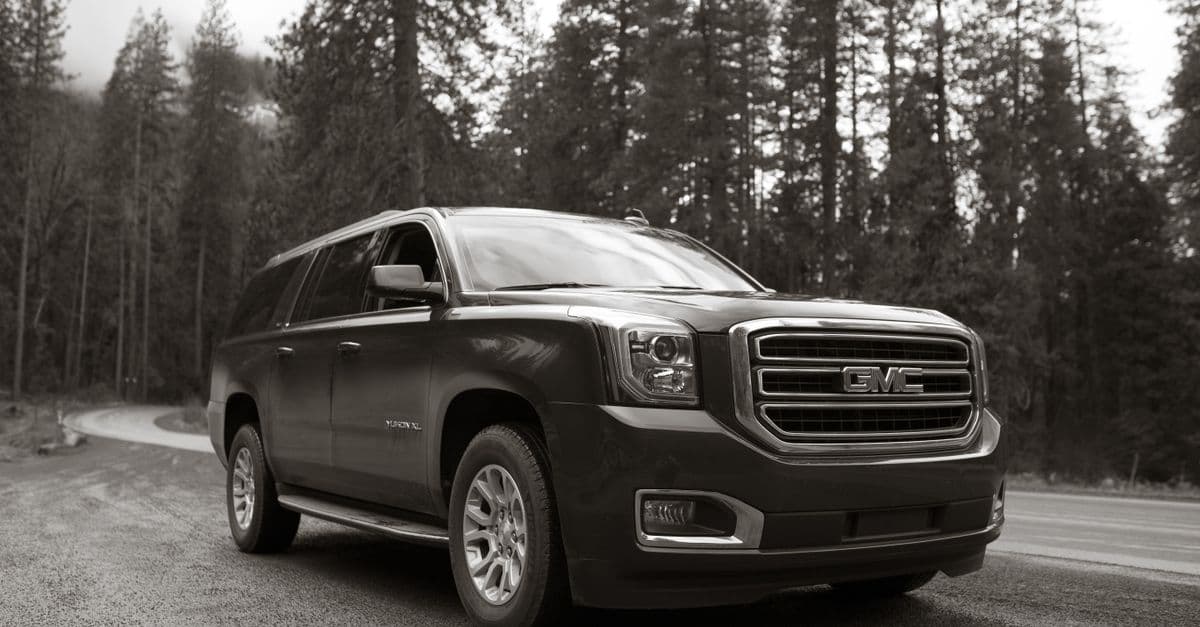
Every December I get the same call from a business owner eyeing a new truck or SUV. A friend told them that if the vehicle weighs more than 6,000 pounds, the business can write off the whole purchase price this year. The rule they are half-remembering is real, but the part almost everyone gets wrong is the form it takes. The Section 179 deduction for vehicles over 6,000 pounds is capped at $32,000 for 2026, not the full sticker price. What actually lets you deduct the entire cost in year one is 100% bonus depreciation, which the One Big Beautiful Bill Act made permanent again. Here is how the two provisions interact, and the mistakes that turn a clean write-off into a recapture bill two years later.
The reason heavy vehicles get special treatment starts with IRC §280F. A passenger automobile is 'listed property,' and §280F(a) caps the annual depreciation you can claim on one. For 2026, Rev. Proc. 2026-15 caps the first-year deduction on a passenger auto at $20,300 if bonus depreciation applies and $12,300 if it does not. A $90,000 sedan driven entirely for business deducts $20,300 the first year and dribbles the rest out over a decade. But §280F(d)(5) defines a 'passenger automobile' as a four-wheeled vehicle rated at 6,000 pounds unloaded gross vehicle weight or less, and for a truck or van, 6,000 pounds gross vehicle weight rating or less. Rate the vehicle above 6,000 pounds GVWR and it falls out of the definition. The luxury caps simply do not apply to it.
Why the Section 179 deduction for vehicles over 6,000 pounds stops at $32,000.
Clearing §280F is not the same as deducting everything through §179. IRC §179 lets a business expense the cost of qualifying property up to $2,560,000 for 2026, with the benefit phasing out dollar for dollar once total purchases for the year exceed $4,090,000, the figures Rev. Proc. 2025-32 sets after the One Big Beautiful Bill Act §70301 raised the old $1,000,000 and $2,500,000 thresholds. But §179(b)(5) carves out sport utility vehicles. Any SUV with a GVWR between 6,001 and 14,000 pounds is capped at a separate, inflation-indexed amount, which is $32,000 for 2026. Congress added that cap in 2004 to close the original 'Hummer loophole.' So if §179 were the only tool in the box, your $90,000 heavy SUV would expense $32,000 and depreciate the remaining basis over six years. That is exactly where most write-off advice stops, and it leaves the biggest deduction on the table.
100% bonus depreciation has no SUV cap.
The $32,000 ceiling lives inside §179 and nowhere else. Bonus depreciation under IRC §168(k) is a separate provision with no SUV limit and no luxury-auto cap once the vehicle is rated over 6,000 pounds GVWR. OBBBA §70301 restored the 100% bonus rate permanently for qualified property acquired and placed in service after January 19, 2025, reversing the Tax Cuts and Jobs Act phase-down that had already cut bonus to 40% for property placed in service early in 2025. The IRS spelled out the transition in Notice 2026-11. So the move on a heavy vehicle is to take §179 up to the $32,000 cap if you want it, then run 100% bonus depreciation over the remaining basis, or skip §179 entirely and bonus the whole cost. Either path deducts the full business-use cost in the year the vehicle goes into service. There is one more reason to prefer bonus on a vehicle: §179 cannot exceed your business's taxable income and cannot create a loss, while bonus depreciation under §168(k) can push the business into a loss for the year.
- Purchase price
- $95,000
- Business-use percentage (substantiated by a mileage log)
- 90%
- Depreciable business-use basis
- $85,500
- Section 179 SUV cap for 2026 (§179(b)(5))
- $32,000
- 100% bonus depreciation on the remaining $53,500 (§168(k))
- $53,500
- First-year deduction, heavy SUV (full business basis)
- $85,500
- First-year deduction if instead a 5,900-lb luxury sedan (§280F cap)
- $18,270
- Federal + Utah tax saved on the heavy SUV at 41.5%
- ≈ $35,483
- Tax saved on the capped sedan
- ≈ $7,582
- First-year advantage of staying over 6,000 pounds GVWR
- ≈ $27,900
Tax year 2026. Assumes a 37% federal marginal bracket plus Utah's 4.5% individual income tax rate (the rate H.B. 106 set beginning in tax year 2025), 90% business use, and a vehicle acquired and placed in service after January 19, 2025, so the permanent 100% bonus depreciation under §168(k) applies. The §280F first-year passenger-auto cap of $20,300 (Rev. Proc. 2026-15) is shown at 90% business use, or $18,270. Ignores the §179 taxable-income limit, any state add-back, and later-year depreciation recapture.
Look at what the GVWR did. The two vehicles cost the same and were driven the same. The heavy SUV deducts its full $85,500 of business basis in year one because it escapes §280F and because bonus depreciation ignores the §179 SUV cap. The sedan, one inch under the weight line on its door label, is stuck at $18,270. That single specification, printed on a sticker, is worth roughly $27,900 of first-year tax. Note also that the $32,000 §179 figure never actually constrains the result, because bonus depreciation mops up the remaining $53,500. The SUV cap only bites if you forget that bonus exists.
Three specifications that decide whether the deduction holds up.
The deduction is real, but it is also one of the most audited line items on a small-business return, because the temptation to overstate business use is obvious. Three things have to be right, and all three are facts you control before you sign anything.
- Weight rating, not curb weight. The 6,000-pound test is the manufacturer's gross vehicle weight rating, found on the certification label inside the driver's door jamb, not the vehicle's actual or curb weight. A vehicle that weighs 5,400 pounds empty can still carry a GVWR over 6,000 pounds, and only the rating counts.
- More than 50% business use, with a log. A vehicle is listed property, so §274(d) and §280F(b) require contemporaneous records of business mileage. Business use must exceed 50% to claim §179 or bonus at all, and the deduction is limited to the business-use percentage. Commuting from home to a regular workplace is personal mileage, not business.
- Placed in service by December 31. Buying the vehicle is not enough. It has to be available and used in the business by year end. A truck delivered on December 28 and first driven for the business in January is a next-year deduction, even if you paid for it in December.
One nuance on the SUV cap is worth knowing, because it can move a vehicle out of the $32,000 limit entirely. The §179(b)(5) cap applies to sport utility vehicles, but a pickup truck with a cargo bed of at least six feet that is not readily accessible from the passenger compartment, and a cargo van with no seating behind the driver, are not 'SUVs' for this rule. Those vehicles qualify for the full §179 deduction with no $32,000 ceiling at all. For most buyers it does not matter, since bonus depreciation already reaches the same place, but it matters in a year when bonus is limited or you have elected out of it under §168(k)(7).
Business use has to stay above 50%, or the deduction comes back.
The write-off is not permanent the moment you take it. Under §280F(b)(2), if business use of listed property drops to 50% or less in any later year within the recovery period, you have to recapture the excess of the accelerated depreciation you claimed over straight-line, and report it as ordinary income in the year the use falls. A contractor who expenses a heavy truck in year one and then mostly uses it for personal errands in year three can owe tax back on the difference. The same recapture logic applies when you sell. A fully depreciated vehicle has little or no basis left, so the sale price is almost entirely §1245 depreciation recapture, taxed as ordinary income rather than capital gain. The deduction is a timing benefit on the personal-use slice and a permanent benefit only on the genuine business-use portion you keep.
This is the same accelerated-depreciation engine that drives the real estate strategies I write about, just applied to a vehicle instead of a building. The cost segregation studies in how high-W-2 earners use real estate front-load deductions on a rental the same way 100% bonus front-loads them on a truck, and both rely on the OBBBA expensing rules that the OBBBA Section 174 small business election also turns on. A vehicle is the smallest of these moves in dollar terms, but it is the one business owners most often do without running the math, and the one where a $20,300 cap and a full write-off sit one weight rating apart. The deduction lands on Form 4562, with the vehicle in the listed-property section of Part V.