
Personal Use of Company Car Tax: What You Add to Your Own W-2.
Titling the truck to your S corp does not make the weekend miles free. The two cheap valuation rules are closed to a 1% owner, and for 2026 the annual lease value rule puts $5,847 on your own W-2 before the last payroll of the year.
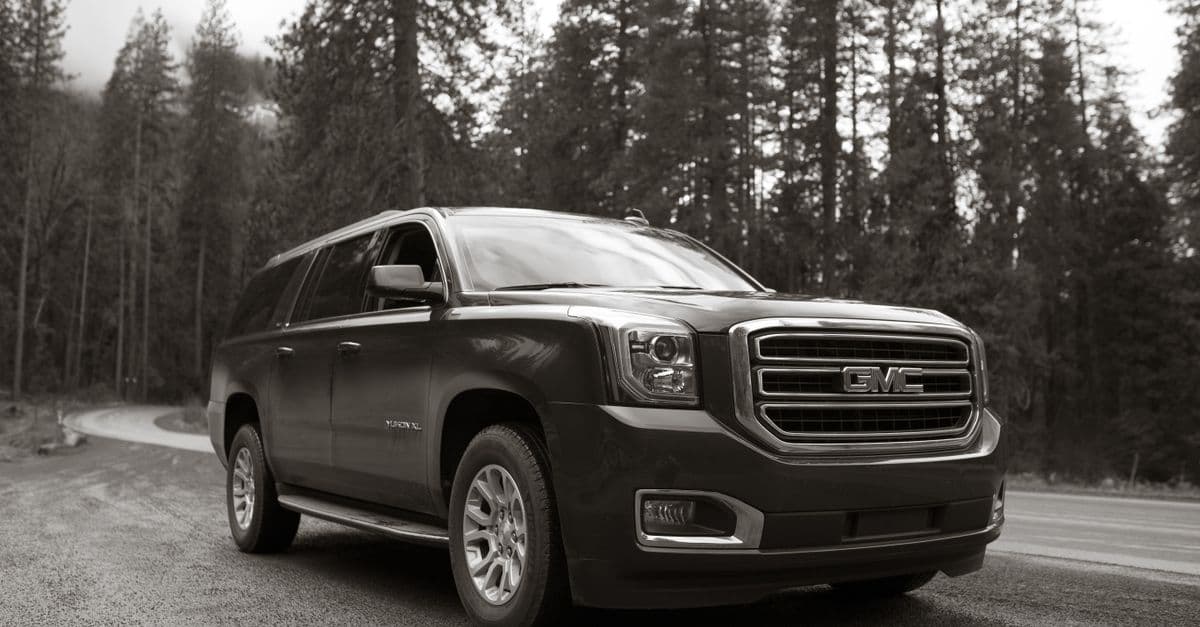
A one-owner S corp buys a $72,000 SUV, titles it to the company, and deducts every dollar of it. Nobody ever puts a number for the owner's weekend driving on the owner's own W-2. Personal use of company car tax is not a step the payroll service forgot. It is the price of the deduction the corporation already took, and for 2026 on that SUV it is $5,847.
The owner gets the expensive method.
The cents-per-mile rule is the simple one: personal miles times the business standard mileage rate, fuel included. 2026 runs two rates, 72.5 cents through June 30 and 76 cents from July 1 under Notice 2026-10 as modified by Announcement 2026-11, so one year's calculation splits at midyear. It also has a ceiling. Notice 2026-10 sets it at a fair market value of $61,700 on the first day the vehicle is available for personal use. A $72,000 SUV is over the line and stays over it, because the test is applied once, at the beginning.
The commuting rule values each one-way trip at $1.50, which is why everybody wants it. Three dollars a day and the problem is gone. It is also the one rule an owner can never use. Treas. Reg. §1.61-21(f) limits it to an employee who is not a control employee, and §1.61-21(f)(5) makes anyone owning 1% or more of the business a control employee with no dollar threshold attached. The indexed tests, $145,000 for an appointed or elected officer and $290,000 for any other employee in 2026 under Notice 2025-67, never even come up for a sole shareholder.
Personal use of company car tax on a $72,000 SUV.
That leaves the annual lease value rule in Treas. Reg. §1.61-21(d). Look up the vehicle's fair market value on the day it was first made available for personal use, read the annual lease value off the table in Publication 15-B, and multiply by the personal share of total miles. The table runs in bands, $44,000 to $45,999 of value carrying an $11,750 annual lease value, and stops at $58,000 to $59,999 for $15,250. Above $59,999 the regulation's formula takes over: 25% of fair market value plus $500.
The table already includes maintenance and insurance, so you do not add those. It does not include fuel, so you do add that, at 5.5 cents for every personal mile the company's fuel card paid for. The choice sticks, too. Under §1.61-21(d)(7) you keep using the lease value rule every year the vehicle is available to any employee, and the table is built on four-year lease terms, so the value gets redetermined at the start of the fifth year.
- Fair market value the day it was first available for personal use
- $72,000
- Cents-per-mile rule, over the 2026 ceiling in Notice 2026-10
- Not available
- Commuting rule at $1.50 each way, barred for a 1% owner
- Not available
- Annual lease value, 25% of $72,000 plus $500
- $18,500
- Personal use, 5,400 of 18,000 miles
- 30%
- Personal share of the annual lease value
- $5,550
- Company-paid fuel on the personal miles, 5.5 cents each
- $297
- Added to boxes 1, 3, and 5 of the owner's 2026 W-2
- $5,847
- What that costs the owner at 24% federal, 4.45% Utah, and 1.45% Medicare
- $1,748
- The same 12,600 business miles reimbursed from a personally owned vehicle
- $9,366
2026 tax year. The SUV was placed in service in November 2025 and available for all of 2026, so no proration applies. An automobile available for 30 or more days but less than a full year prorates the annual lease value by days available over 365 under Treas. Reg. §1.61-21(d)(4). The lease value table in Publication 15-B stops at a $58,000 to $59,999 band of $15,250, so a $72,000 vehicle uses the regulation's formula instead. The lease value covers maintenance and insurance but not fuel, which is added at 5.5 cents a personal mile. Wages already exceed the $184,500 Social Security wage base, so only the 1.45% employee Medicare tax applies, and the corporation owes a matching 1.45%. Utah is flat at 4.45% for 2026 under S.B. 60, retroactive to January 1. The reimbursement line is 6,000 business miles through June 30 at 72.5 cents plus 6,600 from July 1 at 76 cents, under Notice 2026-10 as modified by Announcement 2026-11.
The last two rows are the ones worth sitting with. Doing this correctly costs the owner about $1,748 a year in tax on money that never hit a bank account. The same vehicle in the owner's own name, with business miles reimbursed under an accountable plan, moves $9,366 out of the company tax free and puts nothing on anyone's W-2.
Reporting it does not turn the personal miles into business miles.
For a rank-and-file employee, personal use becomes qualified business use once the employer reports the value and withholds on it. Treas. Reg. §1.280F-6(d)(2) works both sides: an employer that reports commuting value as income and withholds has qualified business use, and one that reports nothing has none. Then IRC §280F(d)(6)(C) cuts out two groups. Leasing the vehicle to a 5% owner is not qualified business use, and neither is use provided as compensation for services by a 5% owner or a related person. The regulation's own example is a plumbing contractor whose brother drives a company car as part of his pay, and it fails on §267(b) relatedness.
For a sole shareholder, the W-2 inclusion buys nothing on the depreciation side. The 50% test in §280F(b) rides on the business miles alone. At 30% personal use, qualified business use is 70% and the depreciation stands. Flip the ratio and the owner is under half, which kills §179 and bonus depreciation going forward and pulls the excess depreciation already claimed back as ordinary income under §280F(b)(2). That is the recapture I priced in the Section 179 deduction for vehicles over 6,000 pounds, and reporting the personal use does not soften it by a dollar.
It has to go through a payroll run.
Publication 15-B lets you treat fringe benefits as paid on whatever schedule you like, as long as it is no less often than annually. For a one-owner S corp with one or two payrolls left, that means the value rides a December run or it does not make the 2026 W-2 at all. You can elect not to withhold federal income tax on it, which keeps the last paycheck of the year from vanishing, but Social Security and Medicare still have to come out of something.
Announcement 85-113, the special accounting rule, is worth knowing before you compute anything. It lets an employer treat benefits provided in November and December as paid in the following year. Use it and the 2026 W-2 carries personal use from November 1, 2025 through October 31, 2026, which is a cleaner window to close in late October than one running through dates that have not happened yet. No notice to the IRS is required. You do have to tell the employee and then stay consistent.
If the vehicle has been in the company three years and none of this ever happened, do not start amending. Reviewing several years of returns for a new client, what creates real exposure is rarely one missed line, it is inconsistent treatment from year to year. Get a log running, pick the method you are allowed to use, and put it on the next payroll. The open risk in the closed years is the personal share of vehicle costs the corporation deducted and should not have, and that figure, not a penalty, is what an examiner would adjust.
Most one-owner S corps should not own the vehicle.
The pitch for putting a vehicle in the company stops at the year-one deduction, and the year-one deduction is real. What it leaves out is the carrying cost: a W-2 inclusion every year the vehicle sits there, a valuation method you are locked into, §1245 ordinary income when you sell, and the §280F exposure above. On the numbers in the table, the accountable plan route hands the same owner a $9,366 deduction with no inclusion, no lock, and no recapture, and the vehicle still belongs to the owner at the end.
Company ownership does win in specific cases. A heavy truck used almost entirely in the business, where mileage reimbursement would never approach what it costs to run. A vehicle driven by employees who are not owners, where reporting the value genuinely does convert the personal use. A real fleet, where the bookkeeping exists anyway. Outside of those, the deduction that sold the idea is worth less than the four years of payroll entries behind it. I worked the purchase side of this question in lease or buy a business vehicle.