
Lease or Buy a Business Vehicle: The Deduction Is the Same, the Timing Is Not.
Over the life of the vehicle, a lease and a purchase deduct the same thing: the business share of what the vehicle actually cost you. The 2026 decision is about timing, and on a truck rated over 6,000 pounds the timing is worth $64,132 in one year.
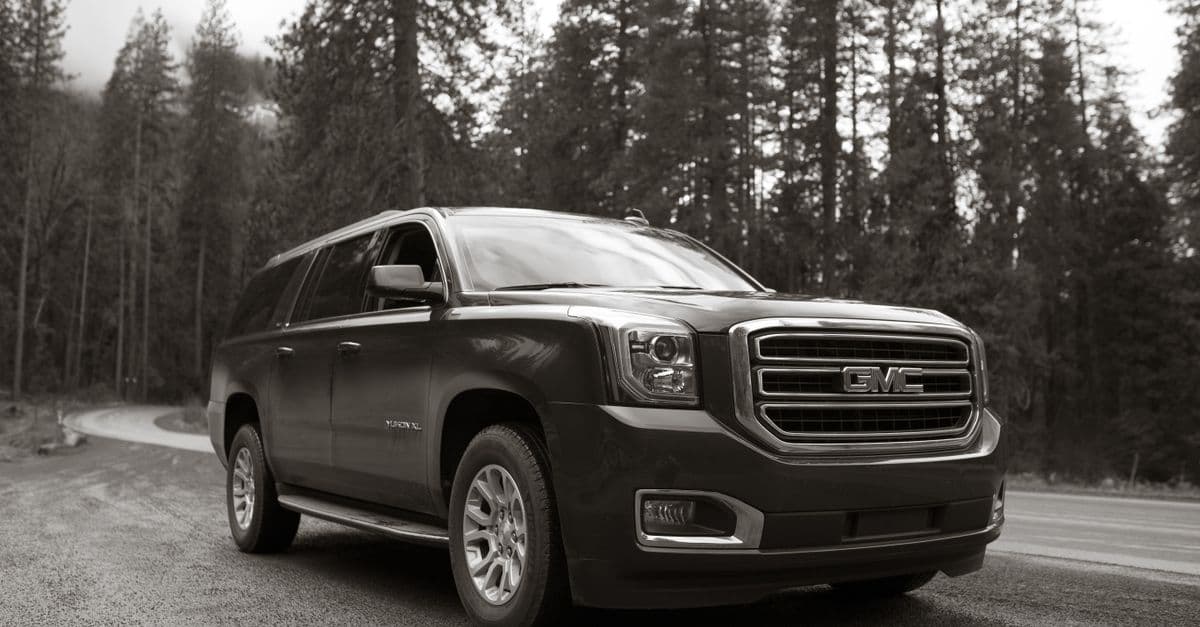
A contractor in Utah County called in late October about a $78,000 truck he had been sitting in for an hour. The salesman had a tax pitch ready: lease it, because you write off the whole payment, and if you buy it the IRS caps what you can deduct. Whether to lease or buy a business vehicle was the real question, and the dealership answer gets it backwards in both directions. You don't write off the whole payment, and on that truck the purchase isn't capped at all.
You don't write off the whole lease payment.
Three things shrink a lease payment before it reaches the return. The first is business use: Publication 463 only lets you deduct the part of each payment that pays for business use, and commuting is personal. At 85% business use, a $1,150 payment is a $978 deduction. The second is the money down. A capitalized cost reduction (the cash you put up at signing) is an advance payment, and Pub. 463 makes you spread it across the whole lease term. $4,500 down on a 36-month lease is $125 a month.
The third is the one the dealership never mentions. A lessee gets no §179 deduction and no bonus depreciation. §179(d)(1) only reaches property acquired by purchase, and the depreciation under §168(k) belongs to whoever owns the vehicle, which on a true lease is the leasing company. On a heavy truck that is the whole ballgame.
The lease inclusion amount is a rounding error.
The scary-sounding part of leasing is the inclusion amount. Treas. Reg. §1.280F-7(a) makes the lessee of a passenger automobile add back a table amount every year, on any lease of 30 days or more, so that renting a car can't beat the §280F depreciation caps an owner lives with. The table for leases beginning in 2026 is Table 3 of Rev. Proc. 2026-15.
Then you read the table. It starts at a fair market value over $62,000, so a 2026 lease on anything worth $62,000 or less carries no inclusion amount at all. The first bracket, over $62,000 and not over $64,000, is $8, $15, $21, $25, and $27 for the first through fifth and later years of the lease. Section 1.280F-7(a)(2) then shrinks even that twice: prorate by the days of the lease term falling in the tax year, then multiply by business use. A $64,000 car leased April 1, 2026 and driven 80% for business produces an $8 table amount, prorated 275/365, times 80%, which is $5.
Five dollars. I have never seen the inclusion amount change a decision, and a preparer who raises it as a reason to buy instead of lease is arguing about the wrong number.
It also disappears entirely above a certain weight. §280F(d)(5) defines a passenger automobile as a four-wheeled vehicle rated at 6,000 pounds unloaded gross vehicle weight or less, and for a truck or van it substitutes gross vehicle weight, which is the GVWR on the door-jamb sticker. Over that line the vehicle isn't a passenger automobile, §1.280F-7 never reaches it, and the inclusion amount is zero no matter what the truck cost.
Lease or buy a business vehicle: the door-jamb sticker decides it.
The same weight line that turns off the inclusion amount turns off the depreciation caps, and that is where the money is. A passenger automobile placed in service in 2026 is capped at $20,300 of first-year depreciation with bonus depreciation, $12,300 without, then $19,800, $11,900, and $7,160 in the years after. Over 6,000 pounds GVWR there is no cap at all, and the One Big Beautiful Bill Act made 100% bonus depreciation permanent for property acquired after January 19, 2025, so the entire business share comes off in year one.
- Purchase price, or capitalized cost on the lease
- $78,000
- Business use, substantiated by a mileage log
- 85%
- Buy: 100% bonus depreciation on the business share, no §280F cap
- $66,300
- Lease: two months of a 36-month lease at $1,275 a month, business share
- $2,168
- Lease: inclusion amount under Treas. Reg. §1.280F-7
- $0
- 2026 deduction advantage to buying
- $64,132
- Buy: §1245 ordinary income when the truck sells for $45,000 in 2029
- $38,250
- Buy: net deduction across the three years
- $28,050
- Lease: net deduction across the same 36 months
- $39,015
- 2026 federal and Utah tax deferred by buying instead
- $18,246
2026 tax year. The $1,275 a month is the $1,150 payment plus the $4,500 due at signing spread over 36 months, which is how Publication 463 requires an advance payment to be deducted. A GVWR over 6,000 pounds keeps the truck outside the passenger automobile definition in §280F(d)(5), so neither the $20,300 first-year cap nor the lease inclusion table in Rev. Proc. 2026-15 touches either column. Bonus depreciation is 100% under §168(k) for property acquired after January 19, 2025. The $45,000 resale figure is an assumption rather than a quote, and it is what makes the two net-deduction rows differ: each column deducts 85% of what the vehicle actually cost, $33,000 on the purchase and $45,900 on the lease. The deferral line uses a 24% federal bracket plus Utah's 4.45% rate and leaves self-employment tax out.
Read the bottom three rows before the top three. Each column ends up deducting 85% of what the vehicle actually cost. The code is not generous to either choice. It just pays out on a different schedule, and buying pays early.
A year-one deduction on a truck is a loan.
Section 1245 is why. When you sell or trade a vehicle you depreciated, the gain is ordinary income up to the depreciation you claimed, reported in Part III of Form 4797. A truck bonused down to zero basis has nothing left to shelter the resale price, so most of it comes back as ordinary income, and if the truck sat on a Schedule C the trade-or-business share of that recapture carries self-employment tax too.
There is a second version that needs no sale. A heavy truck is still listed property under §280F(d)(4), which covers any property used as a means of transportation, so if qualified business use falls to 50% or less inside the recovery period, §280F(b)(2) pulls the excess depreciation back as ordinary income in that year. I covered that mechanic in standard mileage vs actual expenses, and it is the most common way a December purchase turns into an April surprise. A lease has neither problem. Rent is rent, and there is no basis to recapture.
The decision rule.
One lease-specific trap first. You can use the standard mileage rate on a leased car, but Pub. 463 then makes you use it for the entire lease period, renewals included, which is a tighter lock than the one on a car you own. The inclusion amount goes away with it, because the add-back works by cutting the rent deduction and there is no rent deduction left to cut. For 2026 the rate is 72.5 cents a mile through June 30 and 76 cents from July 1.
- Over 6,000 pounds GVWR, business use comfortably above half, and you plan to drive it until it is worthless: buy it and take the bonus depreciation. The recapture never arrives if you never sell at a gain.
- Over 6,000 pounds but you trade vehicles every two or three years: lease it. Section 1245 takes most of the deduction back on each trade, so the paperwork bought you a deferral you kept for 30 months.
- A normally priced car under $62,000: the §280F caps blunt the purchase and the inclusion amount is zero on the lease, so neither answer is interesting. Run the mileage rate against both before you sign.
- Any real chance business use drops to 50% or less: do not buy a heavy vehicle for the deduction. §280F(b)(2) costs more than the deferral is worth, and that math is in the Section 179 deduction for vehicles over 6,000 pounds.
- Cash flow outranks all of it. The lease payment is the smaller check, and a $66,300 deduction that requires a loan you did not want is not a tax strategy.
The honest verdict is that the code is close to indifferent here, and the dealership pitch borrows its force from a deduction you were going to get either way. The calendar is not indifferent. Placing a heavy truck in service by December 31 puts the whole business basis on the 2026 return, and signing on January 2 moves it to 2027. That date, not the lease-versus-buy question, is the one worth planning around.