
The Exit Tax for Renouncing US Citizenship: How Eduardo Saverin Got Out Before the Facebook IPO.
Weeks before Facebook went public, co-founder Eduardo Saverin gave up his US passport and moved his roughly 4% stake to Singapore. The move drew a Senate bill named after him and saved a reported nine figures in future US tax. Here is how the exit tax for renouncing US citizenship works under IRC §877A, who counts as a covered expatriate at the 2026 numbers, and why the date you leave decides the bill.
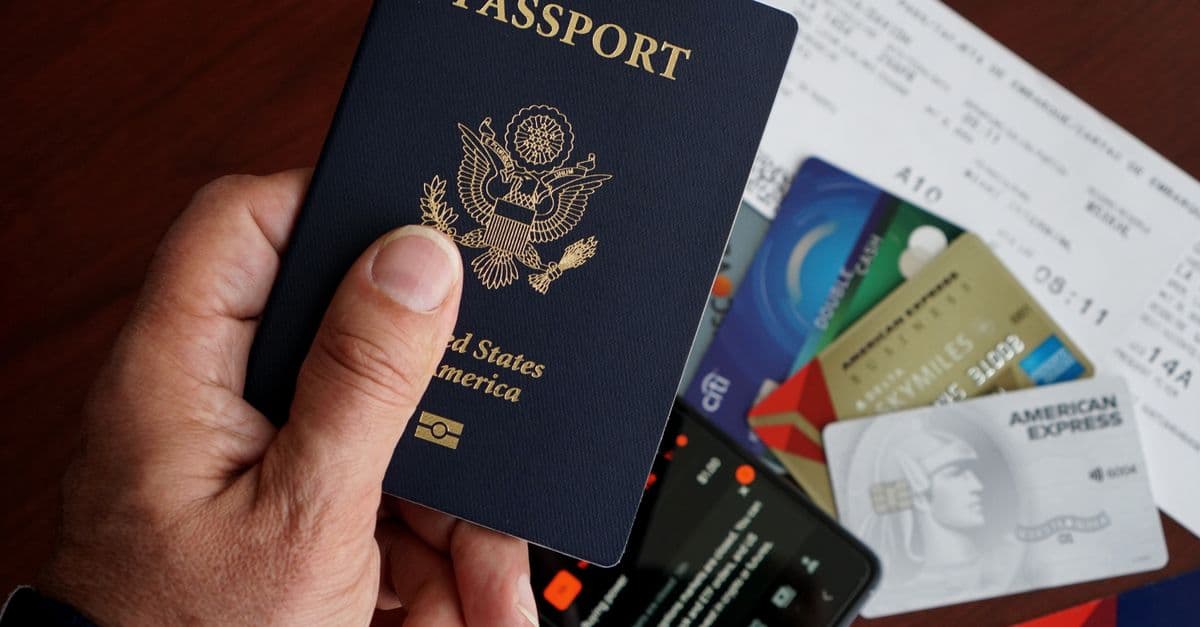
A startup founder holding pre-IPO stock that has gone from a few cents of basis to eight figures of value has a quiet question that most accountants never raise. What happens to the tax bill if I leave the country for good and never come back. The exit tax for renouncing US citizenship is the answer, and it is not a loophole that lets you walk away clean. Under IRC §877A, the day before you give up the passport the government treats you as if you sold everything you own at fair market value and taxes the built-in gain. The planning is all in the timing.
The most famous person to run this play is Eduardo Saverin, the Brazilian-born Facebook co-founder. Saverin had lived in Singapore since 2009, and in September 2011 he formally renounced his US citizenship. The decision became public in May 2012, weeks before Facebook's IPO valued the company at roughly $96 billion and turned his stake of about 4% into stock worth billions. Singapore has no capital gains tax. By the time the news broke, Senators Chuck Schumer and Bob Casey were drafting a bill, the Ex-PATRIOT Act, aimed squarely at him. It never became law. Saverin paid the exit tax, kept his shares, and owed the United States nothing on the appreciation that followed.
It is unfortunate that my personal choice has led to a public debate, based not on the facts, but entirely on speculation and misinformation.
What the exit tax for renouncing US citizenship actually taxes.
Section 877A imposes a mark-to-market regime. On the day before you expatriate, you are treated as having sold every asset you own worldwide at its fair market value, and the net gain is taxed on your final US return. This is a deemed sale, so you owe the tax even though you never actually sold a single share. The first slice of gain is excluded. For 2026 the exclusion is $910,000, up from $890,000 in 2025, indexed for inflation each year. Gain above that is taxed at the capital gains rates that would have applied to a real sale. You report the whole thing on Form 8854, the Initial and Annual Expatriation Statement, and attach it to a dual-status final-year return.
The exit tax only hits people the law calls covered expatriates. If you renounce and you are not a covered expatriate, there is no §877A deemed sale at all. So the first question in any expatriation plan is not how much you will pay, it is whether you are caught in the net in the first place.
Who counts as a covered expatriate in 2026.
You are a covered expatriate if you meet any one of three tests on the date you give up citizenship or long-term residency. The first is net worth: $2 million or more, counting retirement accounts, real estate, business interests, and beneficial trust interests at fair market value. That figure is not indexed and has stood at $2 million since 2008, which means ordinary inflation pulls more people over the line every year. The second is the income test: an average annual net income tax liability above $211,000 over the five years before you leave, a number that is indexed and sat at $206,000 for 2025. The third is the compliance test: you fail to certify, under penalty of perjury on Form 8854, that you have met all federal tax obligations for the five preceding years. Miss that certification and you are a covered expatriate no matter how small your net worth.
Why leaving before the IPO decided the bill.
Here is the part that made Saverin's timing matter. The deemed sale values your assets on the day before you expatriate, not on the day they later become liquid. Saverin renounced in 2011, while Facebook was still private and his shares carried a private-company valuation. The exit tax was computed against that lower number. Every dollar of value the stock gained at and after the May 2012 IPO came after he had already left the US tax system, so the United States got none of it. Had he waited until after the public offering, the deemed sale would have run against a vastly higher share price, and the bill would have been a different order of magnitude. The exit tax is a one-time toll measured at the moment you cross the border. Cross early, at a low valuation, and the toll is small relative to what comes after.
- Fair market value of stock at expatriation
- $10,000,000
- Cost basis (founder shares)
- $0
- Deemed-sale gain under §877A
- $10,000,000
- Less 2026 exclusion amount
- ($910,000)
- Taxable deemed gain
- $9,090,000
- Exit tax at 20% long-term capital gains rate
- $1,818,000
- If instead they stayed: stock later sells for
- $30,000,000
- US tax on $30M gain at 23.8% (with NIIT)
- $7,140,000
2026 tax year. Assumes $0 basis, the 20% top long-term capital gains rate on the deemed sale, the §877A exclusion of $910,000, and a future sale by a still-US person at the 23.8% combined long-term rate including the 3.8% net investment income tax. Ignores state tax and any deferral election. Illustrative only.
The point of the comparison is not the $1.8 million. It is the $20 million of future appreciation that never gets taxed by the United States once you are out, provided you land somewhere that does not tax the gain itself. That is the same idea behind every founder-stock strategy I write about, just taken to its limit. Section 1202 lets a founder exclude a slice of qualified small business stock gain without leaving the country, and Peter Thiel grew founder shares inside a Roth IRA so the appreciation came out tax-free. Expatriation is the nuclear option: you give up the passport, pay one toll, and the future gain is gone from the US base entirely.
What renouncing does not let you escape.
A covered expatriate does not get a clean break. Under IRC §2801, any gift or bequest you later make to a US citizen or resident is taxed to the recipient at the top gift and estate tax rate, currently 40%, for the rest of your life. So if Saverin one day gives money to a US-based relative, that relative owes a transfer tax on it. Deferred compensation, specified tax-deferred accounts like IRAs, and interests in non-grantor trusts each have their own §877A rules and are not all swept into the simple mark-to-market sale. And the certification on Form 8854 is not a formality. If your last five years of returns are not clean, fixing them before you leave is usually the whole project, because failing the compliance test turns you into a covered expatriate even if your net worth is modest.
Renouncing US citizenship is a once-in-a-lifetime, irreversible decision, and the tax piece is only one input among many. But for a founder or investor sitting on a large unrealized gain who genuinely plans to build a life abroad, the §877A math is real, and the date on the renunciation paperwork moves the number more than almost anything else. The mistake is treating it as a paperwork step at the end instead of the central planning event it is.